What Are Some Ways That Race Has Been Used to Rationalize Inequality?
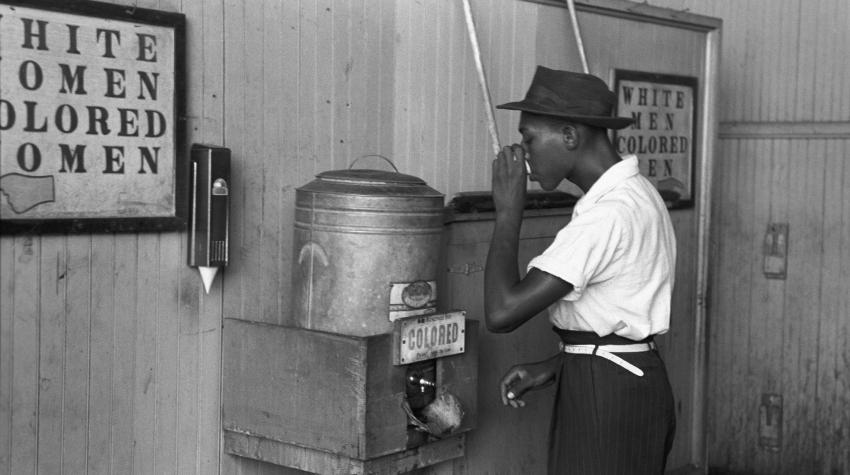
The Ideology of Racism: Misusing Science to Justify Racial Bigotry
In his exceptionally insightful book, Racism: A Short History, Stanford University historian George K. Fredrickson notes the paradox that notions of human equality were the necessary precondition to the emergence of racism. If a society is premised on an assumption of inequality, producing an accustomed hierarchy -- ane unquestioned fifty-fifty by those relegated to its nadir -- then in that location is no need to locate the crusade of the underlings' position in some specific characteristic on their part that makes them less worthy than others.
However, every bit societies take become increasingly committed to the belief in freedom and equality -- every bit one time revolutionary ideas about equal rights for all have go more widespread, particularly in the West -- then those groups that are systematically denied these entitlements are claimed to possess what Fredrickson calls "some extraordinary deficiency that makes them less than fully human". That is, racism arose as a result of the contradiction between egalitarian principles coupled with the exclusionary treatment of specific indigenous groups: the rejection of organically hierarchical societies brought with it the unsaid necessity to account for the fact that some groups were subjected to servitude, enforced separation from the rest of society, or ghettoization.
Start around the end of the eighteenth century, as Enlightenment rationalism replaced faith and superstition as the source of authority, the pronouncements of science became the preferred method for reconciling the difference between principle and exercise. In societies in which at that place has been systematic discrimination against specific racial groups, inevitably it has been accompanied by attempts to justify such policies on scientific grounds.
Broadly speaking, there accept been iii types of scientific explanations offered in putative support for racial discrimination, each of them having a lengthy history. One approach has been to merits that in that location are biological dangers involved in racial interbreeding. Indeed, it was precisely on the basis of this belief that in the The states and S Africa for many years there were statutory prohibitions confronting intermarriage. The first supposed testify for this conclusion was provided in the mid-nineteenth century primarily by physicians, who claimed that, equally a result of their mixed blood, "mulattoes" were considerably more susceptible to affliction than either of their parents and thus exceptionally curt-lived. In addition, were persons of mixed race to intermarry, according to leading anthropologists at the time, they became progressively less fertile, somewhen becoming completely sterile.
In the early on twentieth century, presently later on the scientific community's discovery of Gregor Mendel's work led to a new, exciting co-operative of biology, geneticists warned that the intermarriage of "far apart" races could produce what they called genetic "disharmonies". Charles Benedict Davenport, a globe renowned researcher at the time, observed, for example, that if a fellow member of a alpine race, such as the Scots, should mate with a member of a small-scale race, such as the Southern Italians, their offspring could inherit the genes for large internal organs from 1 parent and for small stature from the other, resulting in viscera that would be too large for the frame. Naturally these claims were non tenable for long, but they were presently replaced by assertions less hands disprovable, every bit some social scientists insisted that the children of mixed race parentage were morally and intellectually inferior to either of the parents.
Although conventionalities in such genetic mismatches was once fairly widespread within the scientific community and cited specifically to rationalize various racially oppressive policies, this notion now enjoys far less credibility. However, while there has been absolutely no show that racial interbreeding can produce a disharmony of whatsoever kind, warnings of some kind of genetic discord are still far from entirely extinct. Merely a few years ago, Glayde Whitney, a prominent geneticist and former President of the Beliefs Genetics Clan, claimed that the intermarriage of "afar races" could produce a harmful genetic mixture in offspring, citing the wide range of health problems afflicting African Americans and their high babe death rate as examples of the furnishings of "hybrid incompatibilities" caused by white genes that were undetected due to the "one drop" convention defining all "hybrids" as blacks. Unsurprisingly, he was also a regular speaker before neo-Nazi groups and, in an accost to a convention of holocaust deniers, blamed Jews for a conspiracy to weaken whites by persuading them to extend political equality to blacks.Another trend in the scientific justification of racial discrimination has been the merits that prejudice is a natural and indeed an essential phenomenon necessary for the evolutionary process to be effective by ensuring the integrity of gene pools. In this view, evolution exerts its selective effect not on individuals simply on groups, which makes information technology necessary for races to be kept split up from each other and relatively homogeneous if there is to exist evolutionary progress. One anthropologist who adheres to this belief refers to the tendency to "distrust and repel" members of other races as a natural part of the human being personality and one of the basic pillars of civilization.
Finally, the most common way in which science has been used to support racial discrimination is through pronouncements that some groups are systematically less well endowed than others in of import cognitive or behavioural traits. This is not to say that there may exist no group differences in these traits, but rather that at this betoken there are no clear conclusions, which in any event would exist irrelevant to issues of social and political equality. Nevertheless, there is again a long history of the use of such claims for oppressive purposes. For the outset quarter of the twentieth century, there was particular business organization over the results of early intelligence tests, which supposedly demonstrated that Southern and Eastern Europeans were not simply intellectually inferior to their Northern counterparts, but were likewise unfit for self-dominion. Some of the nigh of import scientists of the time explained that Nordics, characterized every bit they were by greater self-assertiveness and determination, besides equally intelligence, were destined by their genetic nature to dominion over other races. In the last half century, the controversy over intellectual and moral traits has focused primarily on the differences between blacks and other races, which were often cited by those seeking to preserve white minority dominion in South Africa and legal segregation in the United States.
At nowadays, the near well known researcher to emphasize the importance of racial differences is Canadian psychologist J. Philippe Rushton, the writer of Race, Development, and Behavior: A Life History Perspective, which was distributed unsolicited in an abridged version to tens of thousands of social scientists in an unsubtle attempt to influence both swain scientists and public opinion. In the preface to the abridged paperback, Rushton promised to explain why races differ in crime rates, learning ability and AIDS prevalence. In the ensuing account, he asserted that the behaviour of blacks, whether in Africa or the diaspora, reflected what he called a "basic constabulary of evolution", in which reproductive strategy was linked to intellectual development, such that the more advanced the latter, the fewer the number of offspring and the greater the investment of time and effort in the care of each of them. Thus, he declared, in comparing to Caucasians and Asians, blacks tended to be more sexually active and aggressive, while less intelligent and less capable of self-control, circuitous social organization and family stability. Like Glayde Whitney, Rushton too has been a favourite speaker at conventions of organizations dedicated to political policies that would encode white supremacy officially into constabulary.
In the aftermath of the 2nd World State of war, 2 conferences of internationally recognized scientists, held past the United Nations, Educational, Scientific and Cultural Organization (UNESCO), issued statements near race. Although there were some slight differences in their observations about the possibility of innate differences, both groups agreed that equality equally an upstanding principle concerning the rights to be enjoyed by all members of a society was not predicated on any scientific conclusion about racial characteristics. This position should withal inform our thinking most race and scientific discipline. Although the strains of idea discussed in this article do not take widespread support among contemporary scientists, whether they are advisable issues for scientific pursuit is beside the signal. Such claims, scientifically bogus or valid, should exist utterly irrelevant to the entitlements enshrined in the UN Universal Declaration of Human Rights.

Climatic change, Disasters and Their Mitigation
Scientific show nerveless for decades indicates that climate mitigation, especially through reducing fossil fuel consumption and halting deforestation, is vital to ensuring the long-term welfare of humankind and the biosphere.
reeddreasockinly80.blogspot.com
Source: https://www.un.org/en/chronicle/article/ideology-racism-misusing-science-justify-racial-discrimination

Post a Comment for "What Are Some Ways That Race Has Been Used to Rationalize Inequality?"